
Emergency Response
1. Fire Safety, Extinguisher Use & Emergency Response
Workplace fires can develop rapidly, making prevention, early detection and safe response essential. Employees should understand common fire hazards, how to raise the alarm and when evacuation must take priority over attempting to control a fire.
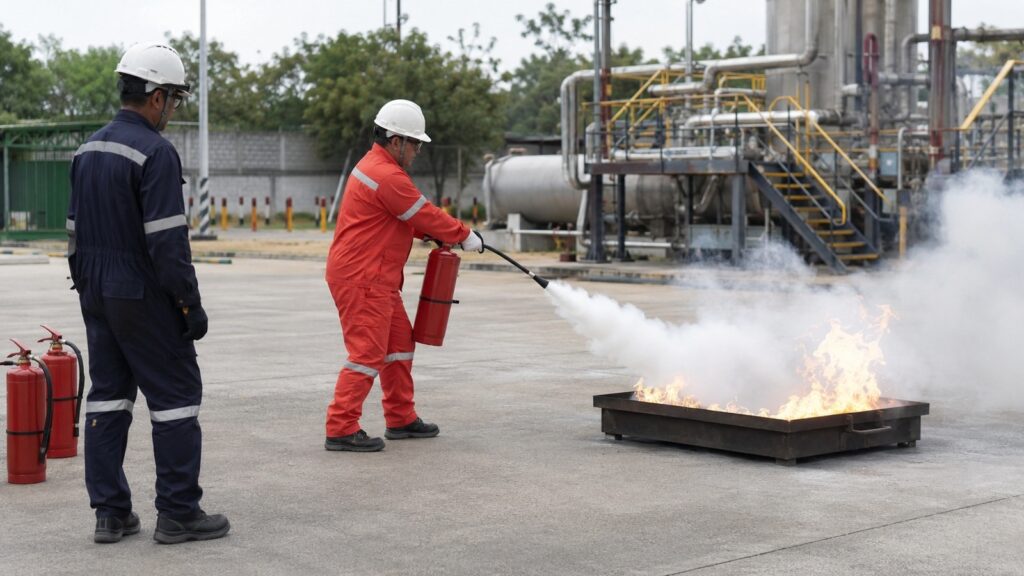
Our Fire Safety training combines prevention, emergency response and practical awareness of portable fire extinguishers.
Training Coverage
Participants will explore:
- Basic principles of combustion
- Fire triangle
- Common workplace ignition sources
- Combustible and flammable materials
- Fire classes
- Fire prevention and housekeeping
- Alarm and detection systems
- Emergency evacuation
- Escape routes and emergency exits
- Assembly points
- Fire extinguisher types and applications
- Safe extinguisher use
- PASS technique
- Limitations of portable extinguishers
- When not to fight a fire
- Roles of employees and fire wardens
Learning Outcomes
Participants should be able to:
- Identify common workplace fire hazards
- Understand basic fire-prevention measures
- Recognise different classes of fire
- Select an appropriate portable extinguisher at an awareness level
- Understand safe extinguisher-use principles
- Raise the alarm and follow evacuation procedures
- Recognise when evacuation should take priority
Customised Corporate Training
2. First Aid & Basic Life Support
During a workplace medical emergency, the actions taken during the first few minutes can be critical. Employees who understand basic first-aid principles are better prepared to protect themselves, assess the situation and provide appropriate assistance until professional medical help arrives.
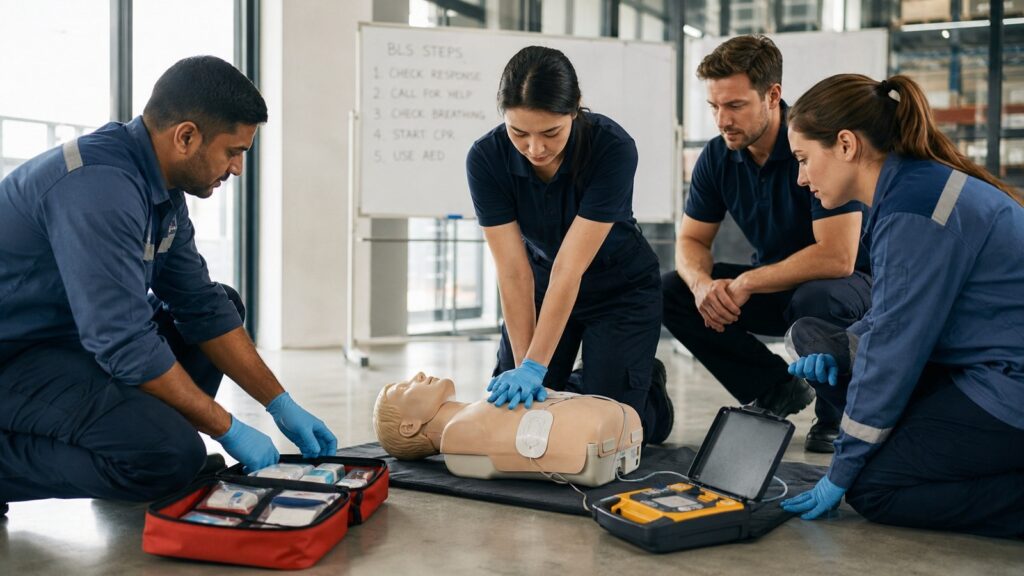
Our First Aid & Basic Life Support training develops practical awareness and confidence in responding to common workplace emergencies.
Training Coverage
Participants will explore:
- Scene safety
- Initial casualty assessment
- Checking responsiveness and breathing
- Basic airway management
- Cardiopulmonary resuscitation (CPR)
- AED awareness and use where applicable
- Severe bleeding
- Shock
- Burns
- Fractures and suspected injuries
- Choking
- Common medical emergencies
- Calling emergency services
- Safe casualty care until assistance arrives
- Incident documentation
Learning Outcomes
Participants should be able to:
- Assess an emergency scene safely
- Conduct an initial casualty assessment
- Understand basic CPR principles
- Recognise serious bleeding and shock
- Take appropriate initial action for burns and injuries
- Recognise selected medical emergencies
- Request professional emergency assistance promptly